Creating content for affiliate marketing can feel a bit overwhelming when you’re starting out. You may be wondering what to write, how to make it useful, and how to get people to actually read it.
The good news is that strong affiliate content doesn’t need to sound perfect. It just needs to be helpful, honest, and written with the reader in mind. If your content gives people real value, it has a much better chance of earning trust, clicks, and search traffic.
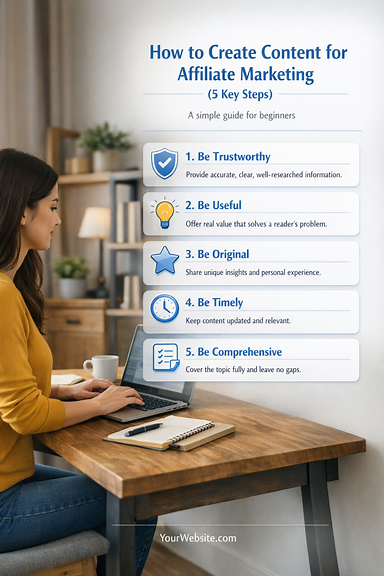
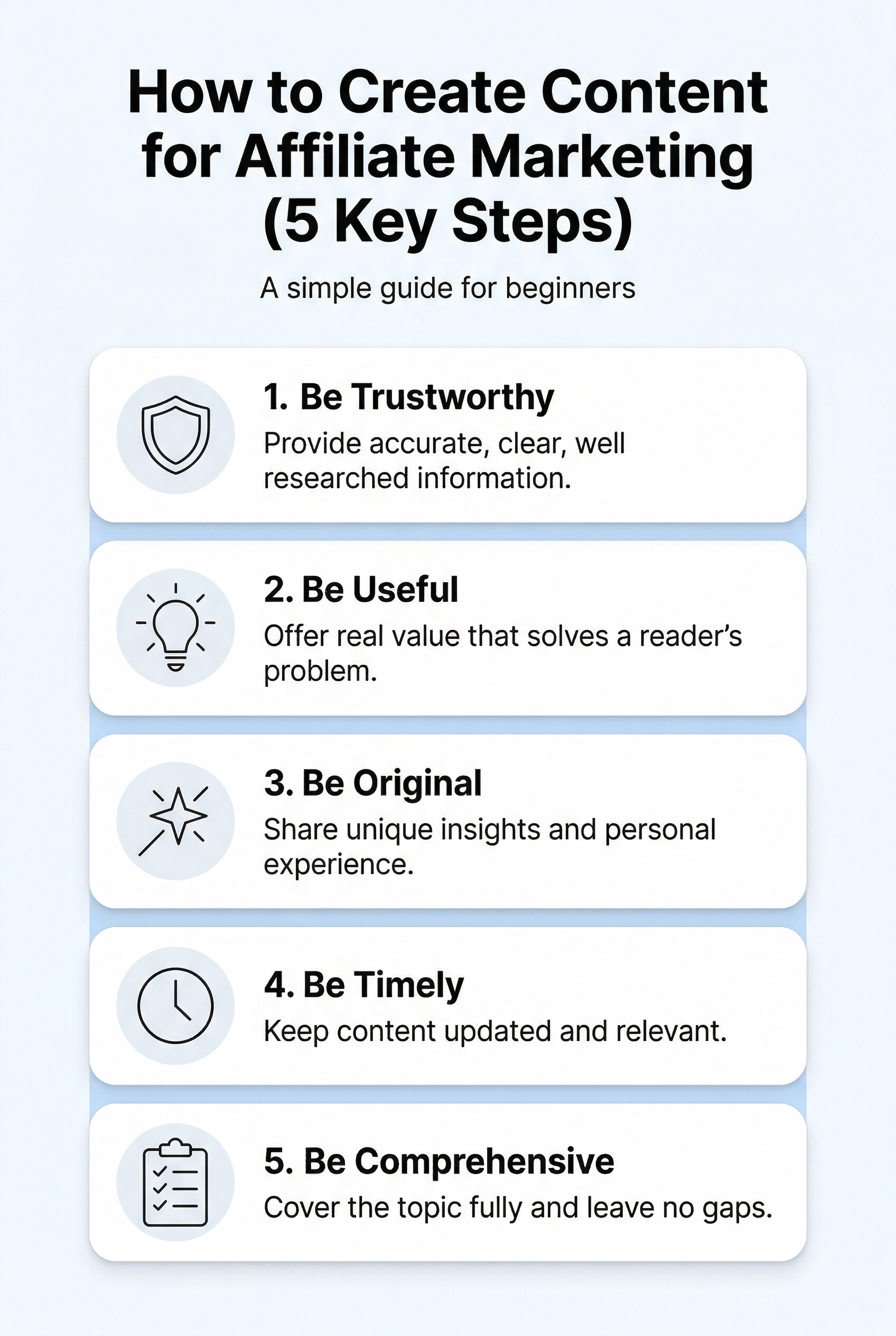
Instead, write in a way that feels honest and real. If you’ve used the product yourself, say so. If there are drawbacks, mention them too. People appreciate balanced content because it feels more genuine.
Ways to build trust:
Share your real experience when possible
Explain both pros and cons
Use accurate, up‑to‑date information
Link to reliable sources where needed.
When readers trust you, they’re far more likely to keep reading and take action.
2. Be Useful
Every piece of content should help the reader solve a problem, answer a question, or make a decision.
Before you start writing, think about what the reader is actually looking for.
Useful content is the kind people want to bookmark, share, or come back to later. It gives them something practical they can use right away.
What are they stuck on?
What do they want to know?
What would make things easier for them?
Useful content builds loyalty and positions you as a reliable guide.
Pro Tip: A simple test is this: if your content doesn’t help the reader move forward, it’s not useful enough and needs more work.
3. Be Original
There’s already plenty of affiliate content online, so yours needs a reason to stand out.
That doesn’t mean you need to be dramatic or clever. It just means bringing your own point of view to the topic. Share what you’ve learned, what worked for you, and what didn’t. Add examples, screenshots, or personal insight where it makes sense.
Some easy ways to make your content feel more original:
Share real results
Explain what worked (or didn’t) in your own words
Add screenshots or examples
Point out details other posts overlook.
Readers can usually tell when content feels copied or generic. Original content feels more helpful and much easier to trust.
4. Be Timely
Online content changes fast. A post that was useful last year may already feel outdated if the product, tool, or process has changed.
That’s why it helps to review your content regularly. Update screenshots, check product details, and add fresh examples when needed. Even small updates can make a big difference.
Ways to keep content timely:
Refresh old posts including any screenshots from time to time.
Update product details when they change.
Replace outdated screenshots.
Add new information as your niche evolves.
Get updated content indexed back with the Search Engines.
Timely content signals to the the search engines that your site is active and reliable. While showing readers that your is worth returning to.
5. Be Comprehensive
Good affiliate content should cover the topic well enough that the reader doesn’t need to keep searching for answers.
That doesn’t mean fluffing the post with extra words. It means giving a complete and useful answer. Cover the basics, explain the details, and include anything the reader is likely to ask next.
A Comprehensive post content often includes:
Real definitions
Real examples
Comparisons
FAQs
Step‑by‑step guidance
When readers find everything they need in one place, they stay longer and are more likely to trust your recommendations.
Why Google’s E-E-A-T Guidelines Matter
Google’s E-E-A-T guidelines stand for Experience, Expertise, Authoritativeness, and Trustworthiness. They matter because they help search engines understand whether your content feels reliable and useful.
The five steps above support E-E-A-T naturally. If your content is honest, helpful, original, current, and complete, it gives both readers and search engines a reason to trust it.
Here’s the simple version:
Experience: Have you actually used the product or topic?
Expertise: Do you understand it well enough to explain it clearly?
Authoritativeness: Do other people see your content as useful?
Trustworthiness: Are you accurate, honest and transparent?
If you want your affiliate content to perform well, this is the kind of foundation it needs. By incorporating the five major points above, you build a rapport with your audience.
Creating Valuable Content for Your Audience
The best affiliate content starts with the reader, not the product.
Think about the questions beginners usually ask. Think about the things that confuse them. Think about what they need explained in plain language. When you write with that in mind, your content becomes much easier to read and much more useful.
A good affiliate post should do more than promote something. It should help the reader make a better decision.
If you know your niche well, use that knowledge to guide the content. Speak to your reader’s problems and give them answers they can actually use.
Pro Tip: Creating content is not just about making a sale; it’s about proving genuine value about the product or service you are writing about and one that helps your audience first and foremost.
Start by understanding your target audience’s needs and pain points.
If you are new to Affiliate Marketing, understanding how your content relates with your chosen niche to gain maximum benefits and more can be found under Affiliate Marketing for Beginners.
Listen to their challenges and deliver solutions through your content.
Keyword research is crucial for SEO, but understanding the search intent behind those keywords is even more valuable.
Optimizing Your Content for Search Engines
SEO Without Overdoing it:
You do not need to stuff your content with keywords to make it work for search engines. A better approach is to write naturally around the topic and make the page easy to understand.
A few simple SEO habits go a long way:
Use clear headings.
Match the content to search intent.
Add internal links where they make sense.
Keep your formatting clean.
Use images that support the topic.
Write in a way that answers real questions.
When your content is helpful for people, it usually becomes easier for search engines to understand too.
Using clear headings
Writing naturally around your topic
Answering search intent
Adding internal links
Using clean formatting
Including helpful visuals (like your infographic)
These simple steps make your content easier for Google to understand and rank.
To ensure your affiliate marketing efforts are seen by the right people, your content must be easy for search engines to find and rank.
Measuring what works and Improving over Time
You do not need to stuff your content with keywords to make it work for search engines. A better approach is to write naturally around the topic and make the page easy to understand.
A few simple SEO habits go a long way:
Use clear headings.
Match the content to search intent.
Add internal links where they make sense.
Keep your formatting clean.
Use images that support the topic.
Write in a way that answers real questions.
When your content is helpful for people, it usually becomes easier for search engines to understand too.
FAQ’s
How long should affiliate content be
Long enough to fully answer the question, no more, no less. Do not add fluff for the sake of it.
Do I need to be an expert to write affiliate content
No. You just need to be honest, helpful, and willing to learn.
How often should I update my content
Every few months is ideal, especially if the product, tool, or information changes.
Conclusion
Creating affiliate content that works is not about writing perfectly. It’s about writing in a way that helps people, builds trust, and gives them a reason to keep reading.
If you focus on being trustworthy, useful, original, timely, and comprehensive, you’ll create content that feels more human and performs better too.
That’s the kind of content people remember, and the kind they’re more likely to click on.