Choosing between a broad or narrow niche can shape the entire direction of your affiliate website. Both approaches work, but only when used at the right time and for the right purpose. This guide shows you how to choose wisely and build a niche that can grow with you.
Disclaimer: Some links in this post may be affiliate links. Purchasing after clicking one of these links may result in a commission for me at no cost to you.
(Quick Summary)
A broad niche gives you long‑term growth and flexibility.
A narrow niche helps you rank faster and build authority quickly.
The smartest strategy is: broad domain name + narrow content focus.
Start with one sub‑niche, publish 20–30 helpful articles, then expand outward.
Use narrow niches to gain traction, and broad niches to scale your site long‑term.
Your niche should be specific enough to avoid huge competition, but wide enough to support 50–100+ articles.
A broad niche covers a large category with many directions. A narrow niche focuses on one slice of that category.
Neither is better. What matters is when you use each one.
When a Broad Niche Makes Sense
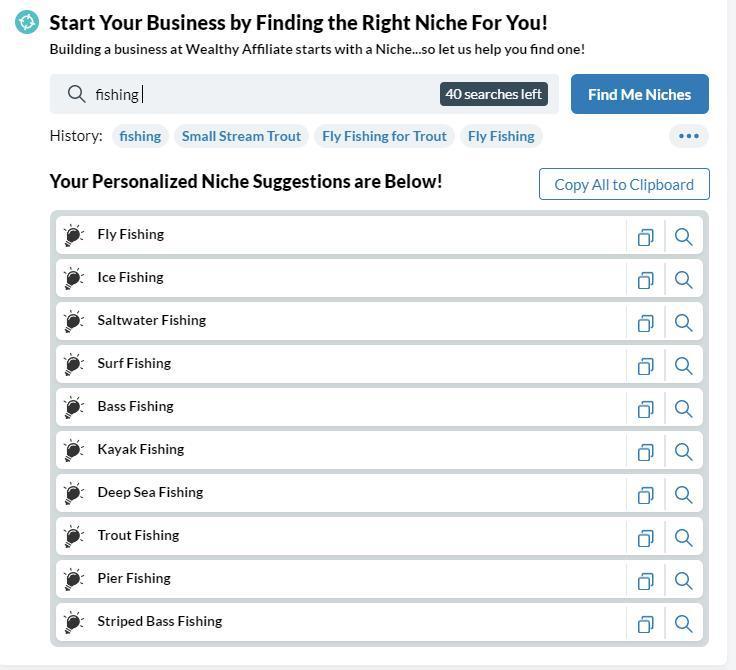
Finding the broad niche for fishing
A broad niche works well when you want:
Room to expand over time
Multiple subtopics under one brand
Long‑term authority potential
Flexibility for future content
Examples of broad niches:
Fishing
Fitness
Pets
Home décor
Travel
A broad niche is ideal for your domain name, but not ideal for your first 20–30 articles.
When a Narrow Niche Makes Sense
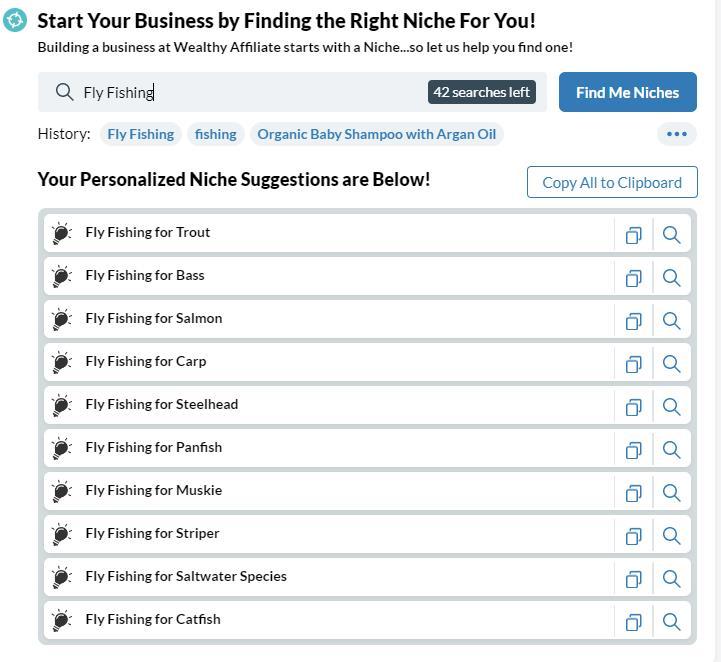
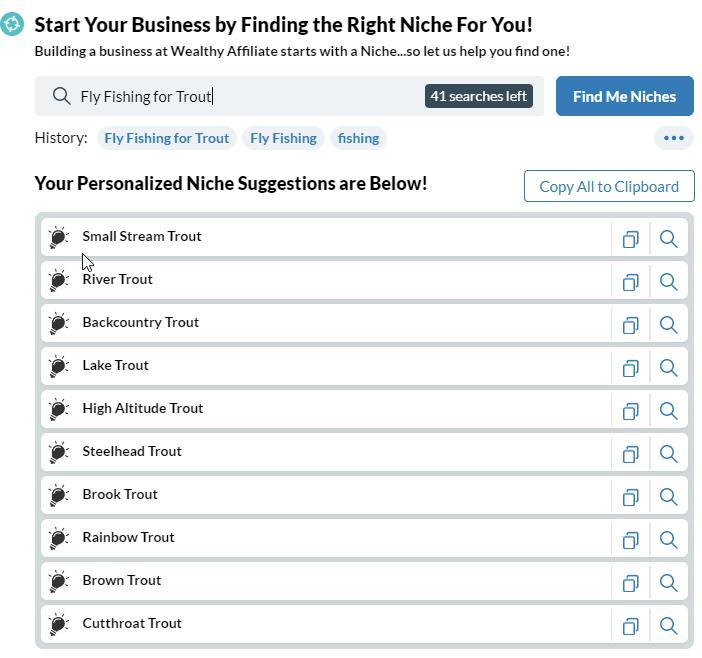
Breaking down my Fly Fishing Niche Further
A narrow niche helps you:
Rank faster
Build topical authority
Attract a specific audience
Create focused, helpful content
Avoid competing with giant authority sites
Examples of narrow niches:
Surf fishing for beginners
Indoor gardening for small apartments
Weight loss for women over 50
Training small dog breeds
This is why most beginners should start narrow, then expand.
The Expansion Path: Start Narrow → Grow Broad
This is the strategy that separates successful affiliate sites from those that stall.
Start with a narrow sub‑niche: Example: Surf fishing for beginners
Build authority: Publish 20–30 helpful articles around that subtopic.
Expand into related subtopics: Example:
Saltwater Reels
Bair Selection
Reading Ocean Tides
4. Grow into the broader niche: Eventually, you can cover:
Freshwater fishing
Kayak fishing
Fly fishing
This gives you fast early traction and long‑term growth.
Examples Across Different Industries
Fishing
Broad: Fishing
Narrow: Surf fishing for beginners
Expansion: Saltwater gear, rigs, bait, tides
Fitness
Broad: Fitness
Narrow: Strength training for men over 40
Expansion: Mobility, nutrition, home gym gear
Pets
Broad: Dogs
Narrow: Training small dog breeds
Expansion: Nutrition, grooming, senior dog care
Home Décor
Broad: Home décor
Narrow: Minimalist décor for small apartments
Expansion: Storage, lighting, furniture, DIY
How to Choose: A Simple 3‑Step Framework
1. Are you brand new?
If yes → Start narrow
2. Does your topic have many subtopics?
If yes → Choose a broad domain name, but start with a narrow content focus
3. Can you write 30–50 articles on your first subtopic?
If yes → It’s a strong narrow niche. If no → It’s too small
Your Domain Name: Broad Always Wins
Your domain should allow you to grow.
Bad example: flyfishingfortrout.com (too narrow)
Better examples: bobsfishingventures.com or allaboutfishing.com
Choose a broad domain, then start with a narrow content focus.
Conclusion
Choosing between a broad or narrow niche isn’t about picking the “right” one; it’s about choosing the one that matches where you are in your journey. Beginners thrive with narrow niches because they’re easier to rank, easier to write for, and easier to build authority in.
As you grow, your niche naturally expands, and your content can broaden with it.
Whether you start small or go wide, the key is consistency, clarity, and creating content that genuinely helps people. Your niche isn’t a trap; it’s a starting point. And you can always grow from there.
Want step‑by‑step training that teaches you how to choose your niche, build your website, and grow your online business the right way?
Take the next step. Your future self will thank you.
FAQ
What is the difference between a broad and narrow niche?
A broad niche covers a large topic with many subtopics. A narrow niche focuses on one specific audience with one specific need. Starting narrow helps you rank faster.
Is it better to choose a broad or narrow niche?
Start narrow to build authority quickly. Use a broad domain name so you can expand later.
Can a niche be too narrow?
Yes. If you can’t write at least 30–50 articles on your first subtopic, it’s too small.
Can I start broad and narrow down later?
You can, but it’s harder to rank. The best approach is: broad domain + narrow content focus.
How do I know if my niche has enough demand?
Search for multiple subtopics, questions, and products. If you can list 50+ article ideas, it’s a healthy niche.